
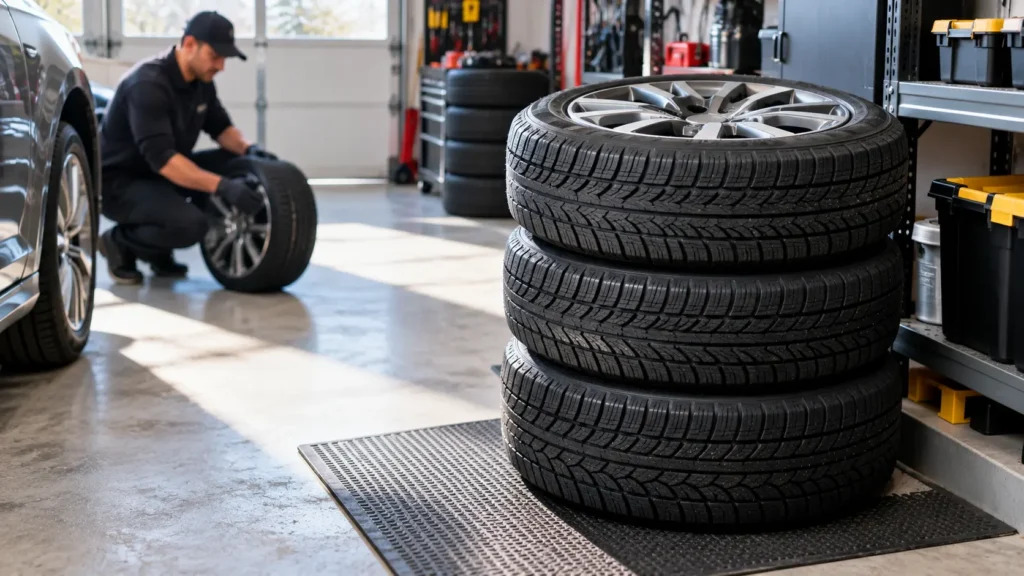
How to store tires on rims is a common question for drivers preparing for seasonal tire changes. The recommended approach is to clean and inspect your wheels, maintain appropriate inflation, and store mounted tires horizontally or on suitable wheel-support racks in a cool, dry location.
Proper storage protects tires from unnecessary exposure to sunlight, moisture, heat, and chemicals. It also makes future tire changes easier.
For drivers who need professional assistance, a trusted Tire shop in Milton can help with seasonal tire preparation and maintenance.
Why Is Proper Tire Storage Important?
Even when tires are not being driven, their rubber and wheel components can deteriorate under unsuitable storage conditions.
Common risks include:
- Cracking caused by prolonged sunlight and ozone exposure.
- Wheel corrosion from trapped moisture or road salt.
- Damage from petroleum products and harsh chemicals.
- Distortion caused by improper storage arrangements.
- Undetected tire damage before the next installation.
According to Michelin Canada, tires should be stored in a clean, cool, dry environment away from direct sunlight and heat sources.
Following these recommendations can help preserve tire condition during the off-season.
How to Store Tires on Rims: Step-by-Step
Preparing your wheels properly is essential before putting them away for several months.
1. Clean the Tires and Rims
Begin by removing road salt, dirt, brake dust, and stones trapped in the tread.
Use water and a suitable mild cleaning product. Avoid petroleum-based cleaners and aggressive chemicals that may damage rubber.
This is especially important after Ontario winters, when road salt can remain on wheel surfaces.
2. Allow Everything to Dry
Never place wet wheels directly into storage bags.
Trapped moisture can encourage corrosion and create poor storage conditions.
Allow the tires and rims to air-dry completely, including areas around the valve stems and wheel openings.
3. Inspect Tire Condition
Examine each tire for:
- Uneven tread wear.
- Sidewall cracks or bulges.
- Cuts and embedded objects.
- Damaged rims.
- Missing valve caps.
If you discover significant damage, arrange a professional inspection before the tire returns to service.
Storage cannot repair an unsafe tire.
4. Label Wheel Positions
Before removing the wheels, identify their original positions:
- FL — Front Left
- FR — Front Right
- RL — Rear Left
- RR — Rear Right
These markings help technicians identify an appropriate rotation pattern during the next installation.
Directional tires and staggered wheel arrangements may require special consideration.
5. Check Tire Pressure
Mounted tires should retain suitable inflation during storage.
Check their pressure using a reliable gauge and follow the manufacturer’s recommendations.
Before reinstalling the wheels, check the pressure while the tires are cold and adjust it to your vehicle manufacturer’s specifications.
Should Tires on Rims Be Stacked or Stored Upright?
Tires mounted on rims should generally be stacked horizontally or hung using suitable wheel-support racks.
The recommended positioning differs from tires stored without rims.
Horizontal Stacking
Stacking is a convenient method for storing a complete wheel set.
Choose a clean, stable surface and place a protective mat underneath.
Lay the wheels flat, carefully stack them, and ensure they cannot tip or fall.
Avoid placing unrelated heavy objects on the stack.
Hanging Mounted Tires
Mounted tires may also be hung using properly installed wheel hooks or storage racks.
The equipment must support the wheel assembly by its rim and accommodate its weight.
Avoid makeshift hooks that could damage the tire or create a safety risk.
Storage Without Rims
Unmounted tires should generally be stored upright rather than stacked horizontally or hung.
| Storage method | With rims | Without rims |
| Horizontal stacking | Recommended | Avoid |
| Hanging by wheel | Suitable | Avoid |
| Upright storage | Not preferred | Recommended |
Always follow any additional instructions from your tire manufacturer.
Where Should You Store Seasonal Tires?
A clean, dry indoor location is generally best for seasonal tire storage.
Garage Storage
A garage can be suitable when tires are protected from direct sunlight, chemicals, standing water, and heat sources.
Use a stable platform or appropriate rack to keep wheels organized.
Basement Storage
A dry basement may provide relatively stable temperatures.
However, avoid damp rooms, flooding risks, and locations near heating equipment.
Outdoor Storage
Long-term outdoor storage is generally discouraged.
Rain, ultraviolet light, moisture, and temperature fluctuations can contribute to tire deterioration.
For storage lasting several months, choose a suitable indoor environment whenever possible.
Should You Use Tire Storage Bags?
Tire storage bags can help protect wheels from dust, sunlight, and contamination.
Before using them, make sure the tires are clean and completely dry.
Choose bags or covers suitable for the wheel size and keep the covered tires in an appropriate indoor location.
Remember that protective bags cannot compensate for excessive heat, moisture, or unsuitable storage conditions.
Common Tire Storage Mistakes to Avoid
Several avoidable mistakes can affect tire condition.
Storing dirty wheels: Road salt and debris may contribute to corrosion.
Using incorrect positions: Mounted and unmounted tires require different storage arrangements.
Exposing tires to sunlight: Prolonged ultraviolet exposure can accelerate rubber deterioration.
Keeping tires near chemicals: Gasoline, oils, and solvents should remain separate from stored tires.
Skipping inspections: Check tire condition both before storage and before the next installation.
Following a consistent storage routine can reduce these problems.
When Should You Store Winter Tires in Milton?
Many Ontario drivers switch from winter tires when temperatures consistently rise above approximately 7°C.
Winter tires are designed for colder conditions, while suitable summer and all-season tires generally perform better in warmer weather.
During autumn, drivers should prepare winter tires as temperatures consistently approach or fall below 7°C.
For additional seasonal guidance, read When Should You Install Winter Tires? Timing & Tips.
Planning early provides time to inspect, clean, and organize your seasonal tire set.
Is Professional Tire Storage Worth Considering?
Not every driver has enough suitable space to store four mounted wheels.
Professional storage can be convenient for people living in apartments, condominiums, or homes with limited garage space.
It may also help drivers who prefer not to transport or handle heavy wheels themselves.
For those exploring Tire storage services in Milton, Milton Tires can provide information about current storage availability and seasonal tire services.
Before booking, confirm storage arrangements, inspection options, and service availability.
Frequently Asked Questions
What is the best way to store tires on rims?
For typical passenger-car tires, stack mounted wheels horizontally or use suitable wheel-support racks. Choose a cool, dry, dark indoor location away from chemicals and heat.
Can you store tires on rims vertically?
Vertical storage is generally not preferred for mounted passenger-car tires during extended off-vehicle storage. Horizontal stacking or appropriate hanging arrangements are commonly recommended.
Do mounted tires need air during storage?
Mounted tires should retain appropriate inflation according to manufacturer guidance. Check pressure before storage and again before installation.
Can winter tires be stored in a garage?
Yes, provided the garage remains sufficiently dry and protects the tires from direct sunlight, excessive heat, moisture, and chemicals.
How long can tires remain in storage?
Tires may remain stored between seasons under appropriate conditions. However, rubber continues to age, so inspect tires before reuse and follow manufacturer guidance on tire condition and service life.
Final Thoughts
Knowing how to store tires on rims helps you protect your seasonal tire investment.
Clean and inspect the wheels, maintain suitable inflation, select the correct storage position, and keep tires in an appropriate indoor environment.
For drivers in Milton and surrounding Ontario communities, professional seasonal tire services can make storage and changeovers more convenient.
Proper tire storage today helps keep your wheels ready for the next driving season.
Need Help With a Damaged Tire?
Our Milton team can inspect your tire and recommend the right repair or replacement.