
A faint hum on the highway that you swear wasn’t there last week. A steering wheel that trembles just a little at 100 km/h. A dashboard light that flicks on, then off, then on again.
Most drivers do the same thing. They turn up the radio and keep going.
Then one cold Milton morning, on the way to work, the small thing becomes a big one. A soft tire. A slow pull toward the shoulder. Sometimes worse.
Here’s the good news hidden in that story: tires almost always warn you before they fail. The trick is learning how to listen. At Milton Tires, we see how these stories end every week, and the drivers who catch the early signs are the ones who avoid the roadside call.
So let’s walk through what your tires are trying to tell you.
The Light on Your Dash Is the First Whisper
That little horseshoe-shaped symbol is your tire pressure warning light, or TPMS.
When it glows, at least one tire is low on air. Sometimes it’s a slow leak. Often, in our Canadian winters, it’s simply the cold squeezing the air in your tires as the temperature drops.
Either way, it’s a whisper worth listening to. Check your pressure and top up the air. If the light keeps returning after that, the cold isn’t the culprit, and a leak probably is.
When Your Car Starts to Shake
A little road buzz is normal. A steady shake is your tire raising its voice.
Maybe you feel it in the steering wheel. Maybe it comes up through the seat. It often shows up at higher speeds and slowly gets worse over the following weeks.
That vibration usually points to a balance problem, uneven wear, or damage hidden inside the tire. It rarely fixes itself, and it tends to grow until something forces the issue. Better to answer the tire before it insists.
The Sounds That Mean Trouble
Your ears are one of the best tire-diagnostic tools you own. A few sounds are worth knowing.
A hum or growl that rises with your speed often means uneven tread wear. A steady thump-thump-thump can signal a flat spot or internal damage. A squeal in corners may be low tread or low pressure calling for attention.
If a new noise appears and stays, treat it as a message, not background music.
The Steering Wheel That Won’t Sit Straight
Here’s a quiet one that many drivers miss.
You’re on a flat, straight road. You loosen your grip for a second, and the car drifts to one side on its own.
That pull often traces back to uneven tire pressure, uneven wear, or an alignment that has slipped, sometimes after meeting a deep pothole. Left alone, it wears your tires faster and makes the car harder to control. This is exactly the kind of thing a proper inspection catches early, and it’s part of the everyday tire services in Milton that keep drivers safe without drama.
What the Tread Is Telling You
Your tread is what actually grips the road. As it wears down, your tires lose their bite, especially in rain and snow.
There’s a simple test you can do in your driveway with pocket change. Slide a toonie into the tread. If the rubber reaches the bear’s paws, you have plenty of life left. If it only reaches the silver edge, you’re shopping for new tires soon.
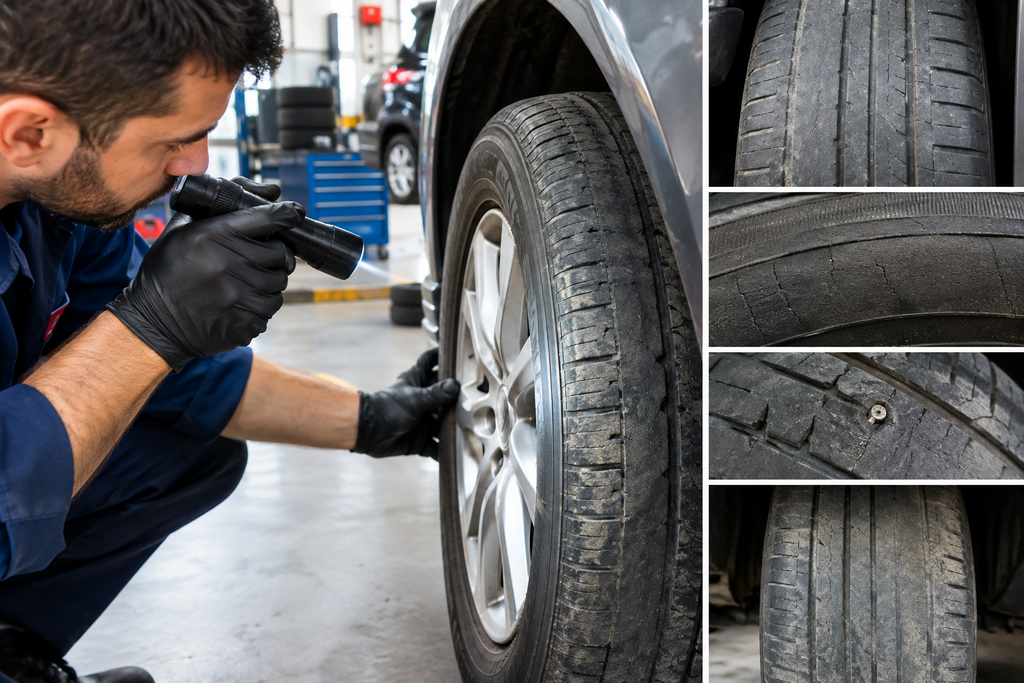
Also look at how the tread is wearing. One edge balder than the other, or odd bald patches, is a sign that pressure, alignment, or suspension needs a look. Even tread wears evenly. Uneven tread is a clue.
The Damage You Can See With Your Own Eyes
Some warnings don’t need a test at all. They’re right there on the rubber.
A bulge or blister on the sidewall means the tire’s inner structure has failed. That tire can let go suddenly, so it needs replacing right away. Cracks in the rubber point to age or dry rot, quietly weakening the tire and letting air escape.
Then there’s the classic: a nail, screw, or shard of glass buried in the tread. A small puncture in the center tread can often be fixed. If you find yourself in that spot, our guide on how to repair a car tire walks through exactly when a puncture is safe to repair and when it isn’t.
One rule to remember. If something is stuck in your tire but it’s still holding air, leave it in place and drive straight to a shop. Pulling it out can turn a slow leak into a fast flat.
The Tire That Keeps Going Soft
If you’re topping up the same tire again and again, that tire is telling you something plainly.
A repeat leak usually means a puncture, a tired valve, or a poor seal where the tire meets the rim. It won’t heal on its own. And a small leak has a habit of becoming a flat on the coldest, busiest, least convenient morning of your week.
The Sign With No Symptoms: Age
This is the sneaky one, because the tire can look perfectly fine.
Rubber hardens and weakens with time, even on a car that mostly sits in the driveway. Most manufacturers suggest replacing tires around the six-year mark, and no later than ten, no matter how much tread is left. If you’re unsure, check the date stamped into the sidewall.
An old tire with good tread is still an old tire.
A Two-Minute Habit That Prevents Most of This
You don’t need tools to stay ahead of trouble. Once a month, give your tires a slow walk-around.
Check the tread with a toonie. Look for bulges, cracks, and anything stuck in the rubber. Check the pressure while the tires are cold. And pay attention to any new shake, pull, or sound while you drive.
Those two minutes catch the vast majority of tire problems while they’re still small, cheap, and safe to fix.
Listen Early, Drive Easy
Every tire failure has a beginning. A light. A shake. A hum. A soft morning tire.
The drivers who stay safe are simply the ones who answer those signals early, instead of turning up the radio. Catch it early and you’re usually looking at a quick repair. Wait too long and the road tends to choose the moment for you.
If your dash light is on, your car is shaking, or a tire keeps going soft, don’t wait for the story to finish itself. Bring it in and let a certified technician take a look.
Frequently Asked Questions
What is the most common sign of tire trouble?
Low tire pressure is the most common, usually shown by the TPMS light on your dash. Ignored, it leads to poor handling, faster wear, and even a blowout.
Is it safe to drive with a vibrating tire?
It’s best not to. A steady vibration can point to balance issues or internal damage that only worsens over time. Have it checked soon.
How do I know if I need a repair or a new tire?
Small punctures in the center tread can often be repaired. Sidewall damage, large holes, bulges, and worn tread usually mean replacement. A technician can confirm what’s safe.
How often should I check my tires? A quick visual and pressure check once a month is a good habit, plus before any long road trip. Seasonal changeovers are another perfect time for a full inspection.
Need Help With a Damaged Tire?
Our Milton team can inspect your tire and recommend the right repair or replacement.