
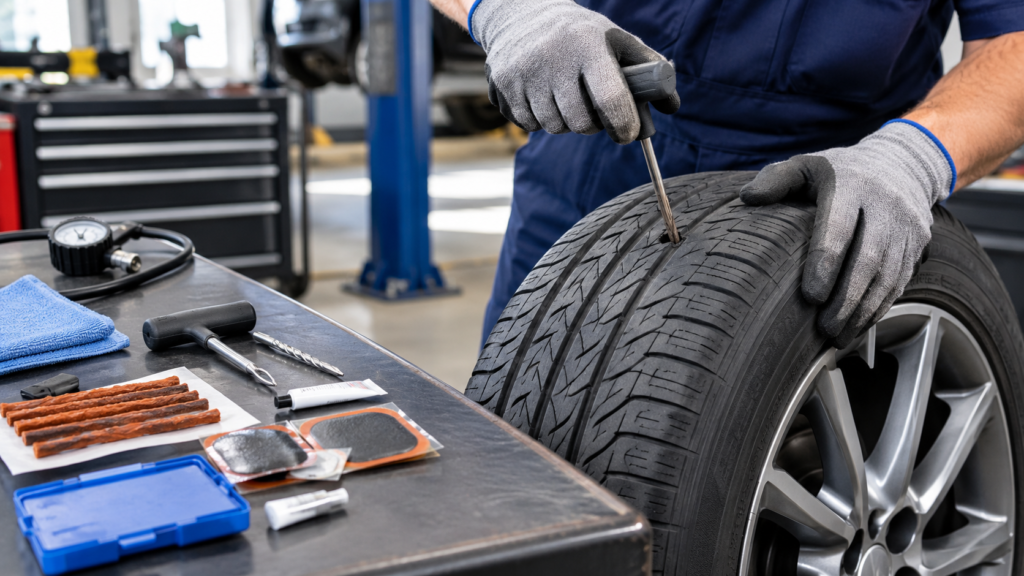
A flat tire always seems to happen at the worst time. You’re late for work, it’s cold out, and there’s a nail stuck right in your tread.
The good news? Many flat tires can be safely fixed. The important part is knowing which ones, and doing the repair the right way.
This guide from the team at Milton Tires breaks it all down in plain language. We’ll cover plugs, patches, the safety rules the pros follow, and the clear signs it’s time to replace the tire instead.
First: Don’t Drive on a Badly Flat Tire
Before anything else, a quick safety note.
Driving on a fully flat or nearly flat tire can wreck it for good. The soft rubber folds and overheats. This is called “run-flat damage,” and it can ruin a tire that was otherwise fixable.
If your tire is flat, pull over safely. Then either add air, swap on your spare, or call for help. Getting the tire to a shop soon gives you the best shot at a simple repair.
Can Every Flat Tire Be Repaired?
No, and this is the part most people get wrong.
There are clear industry safety standards for tire repair, set by groups like the U.S. Tire Manufacturers Association (USTMA). Reputable shops in Canada follow them. These rules exist for one reason: your safety at highway speed.
Here’s what makes a puncture repairable.
Rule 1: The Hole Must Be Small
The puncture has to be no bigger than 1/4 inch (6 mm) across. That’s roughly the width of a standard nail or screw.
Anything larger damages too many of the internal steel belts and cords. A repair simply can’t restore that strength.
Rule 2: It Must Be in the Tread
The puncture must sit in the center part of the tread, sometimes called the “crown” or the safe zone.
It also needs to be at least about half an inch away from the shoulder, where the tread curves into the side of the tire.
Rule 3: The Sidewall Is Off Limits
This one has no exceptions. A puncture, cut, or bubble in the sidewall cannot be repaired. Ever.
The sidewall flexes constantly as you drive. No patch can hold there safely. A sidewall injury means the tire needs to be replaced.
Rule 4: Not Too Many Repairs
Most standards allow a tire only two repairs total, and they can’t overlap. If your tire already has patches, a new puncture may push it past the safe limit.
Tire Plug vs. Patch: What’s the Difference?
People use these words like they mean the same thing. They don’t. Understanding both helps you know what a proper fix looks like.
What Is a Tire Plug?
A plug is a sticky rubber strip pushed into the hole from the outside.
Plugs are quick and cheap. Roadside kits use them. But on their own, they’re only a temporary fix. They don’t seal the inside of the tire, and they don’t let anyone inspect for hidden damage.
What Is a Tire Patch?
A patch is a flat piece of rubber bonded to the inside of the tire, over the puncture.
To do it, the tire has to come off the wheel. That’s actually a good thing, because it lets a technician inspect the inside for damage you’d never see from the outside.
The Plug-Patch Combo: The Right Way
Here’s the key takeaway.
The proper, industry-approved repair is a combination plug and patch done from the inside. It’s sometimes called a “patch-plug” or “mushroom” repair.
The plug fills the puncture channel. The patch seals the inner liner. Together they restore an airtight, safe seal. A plug alone or a patch alone doesn’t meet the standard.
How a Proper Tire Repair Actually Works
So what happens when you bring a flat to a professional? Here’s the basic process behind proper tire repair services in Milton.
- Find the leak. The tech locates the puncture and checks its size and location against the safety rules above.
- Remove the tire from the wheel. This is a must. It’s the only way to inspect the inside.
- Inspect the inner liner. They look for hidden cracks, heat damage, or wear from driving on low air.
- Prep the area. The spot is cleaned and buffed so the patch will bond properly.
- Install the combo repair. The plug-patch is applied, sealing both the hole and the inner liner.
- Remount and balance. The tire goes back on, gets inflated, and is balanced so you don’t feel a vibration.
Done right, this kind of repair can last the rest of the tire’s life.
Can You Repair a Car Tire Yourself?
You can, but let’s be honest about what a DIY plug kit really is.
A roadside plug kit is an emergency tool, not a permanent solution. It can get you off the highway and to a shop. That’s its job.
The problem is it doesn’t let you inspect the inside of the tire. You might plug a hole while missing hidden damage that makes the tire unsafe. You also can’t confirm the puncture is truly within the safe zone.
Our honest advice: use a plug kit to get moving if you must, then have the tire properly inspected and repaired soon after. It’s a small cost for real peace of mind.
When You Should Replace the Tire Instead
Sometimes a repair just isn’t safe. Replace the tire if:
- The puncture is larger than 1/4 inch.
- The damage is in the sidewall or shoulder.
- You have a cut, gash, or bubble, not a clean puncture.
- The tire was driven flat and shows heat or wear damage inside.
- The tread is already worn out (in Canada, 4/32″ is a smart winter minimum).
- There are multiple or overlapping punctures.
When in doubt, ask a professional to inspect it. A good shop will tell you honestly whether a repair is safe or whether you’re better off replacing the tire.
How Long Does a Tire Repair Last?
A proper plug-patch combo, installed correctly in the safe zone, is meant to be permanent. It should hold for the remaining life of the tire.
If a “repaired” tire keeps losing air, that’s a red flag. It usually means the original fix wasn’t done properly, or the tire had damage that shouldn’t have been repaired at all. Get it looked at.
Simple Ways to Avoid Flats
You can’t dodge every nail, but you can lower your odds.
- Check your tire pressure monthly. Low pressure causes heat and damage.
- Watch your tread depth. Worn tires puncture more easily.
- Rotate your tires on schedule for even wear.
- Avoid road debris and deep potholes when it’s safe to do so.
- Don’t ignore slow leaks. A small issue caught early is a cheap fix.
Regular tire care is the easiest way to avoid a flat in the first place.
Get Your Flat Fixed the Right Way in Milton
A tire repair is only as safe as the person doing it. That’s where we come in.
At Milton Tires, our certified technicians follow the industry safety standards covered in this guide, every time. We inspect each tire from the inside, use proper plug-patch repairs, and tell you honestly when a tire should be replaced instead of patched. With over a decade of experience and 190+ five-star reviews, we’re proud to be one of the most trusted names for tire repair in the area.
From flat tire repairs and seasonal changeovers to wheel alignments, our full range of tire repair services covers every make and model. Weekend appointments are available, and we price match locally.
Milton Tires 📍 410 Industrial Dr, Milton, ON L9T 5A6 📞 (905) 266-2275 🕘 Mon–Fri 9:00 AM–6:30 PM | Sat 9:00 AM–6:00 PM | Sun Closed
Got a flat or a slow leak? Bring it in and let our team take a look.
Frequently Asked Questions
Is it safe to drive with a plugged tire?
A temporary plug from a roadside kit is only meant to get you to a shop. For safe, long-term driving, you need a proper plug-patch combination repair done from inside the tire.
Can you repair a run-flat tire?
It depends on the tire and the damage. Many manufacturers advise against repairing run-flats, especially if they’ve been driven on while flat. Always have it inspected by a professional.
How much does a tire repair cost?
A proper repair is far cheaper than a new tire, which is why fixing an eligible puncture makes sense. Costs vary by shop and tire, so it’s best to call for a quick quote.
Can a tire be repaired twice?
Sometimes. Most standards allow up to two repairs, as long as they don’t overlap and both sit in the safe tread zone. A technician should confirm it’s still safe.
My tire has a nail but isn’t losing air. Should I pull it out?
No. Leave it in and bring the tire to a shop. Pulling the nail yourself can turn a slow leak into a fast one, and the tire still needs a proper inspection.
This article is for general information. Tire safety depends on your specific tire and the exact damage. For a reliable assessment, have your tire inspected by a certified professional.