
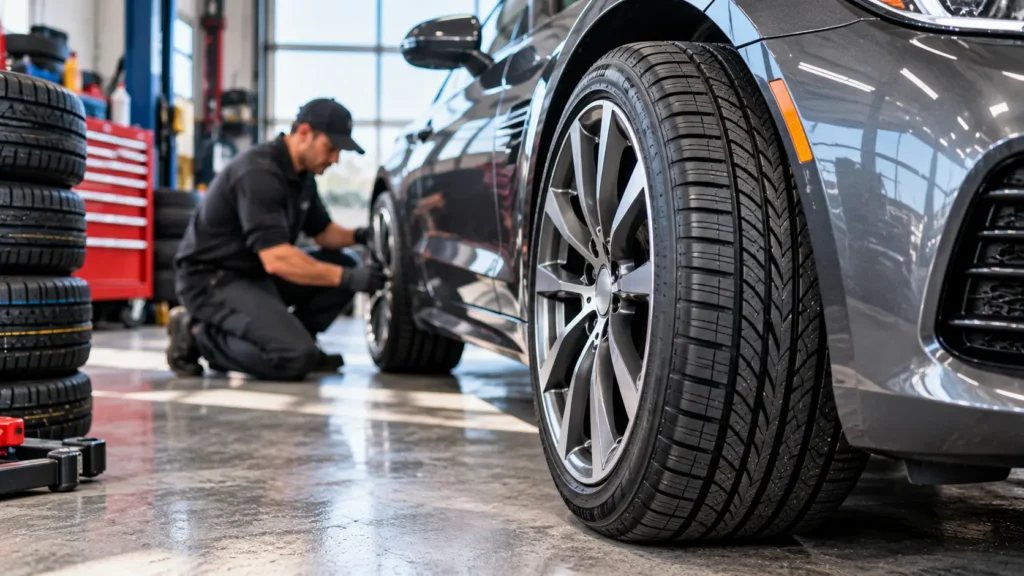
High-performance all-season tires offer responsive steering, strong dry-road handling, and wet-weather traction for drivers who want sporty performance with everyday versatility. They are designed to handle a wider range of conditions than dedicated summer performance tires, although they have limitations in severe winter weather.
For drivers in Milton, Ontario, choosing the right tires means considering highway commuting, changing temperatures, rainfall, and driving comfort.
Whether you own a sports sedan or a performance-oriented coupe, understanding tire features helps you make a better purchasing decision.
A trusted tire shop in Milton can help you compare tire specifications and find a suitable option for your vehicle.
What Are High-Performance All-Season Tires?
High-performance all-season tires are passenger vehicle tires designed to balance sporty handling with practical everyday use.
Unlike regular touring tires, they generally emphasize steering response, cornering stability, and road grip.
Common characteristics include:
- Responsive handling on dry pavement.
- Tread patterns designed for wet traction.
- Performance-focused rubber compounds.
- Greater seasonal flexibility than summer-only tires.
- Various speed ratings for different vehicle requirements.
Some models belong to the ultra-high-performance all-season category, often called UHP all-season tires.
These tires are popular among drivers who appreciate performance but also need comfort during daily commuting.
However, performance differs considerably between tire models.
Key Benefits of High-Performance All-Season Tires
1. Better Steering Response
Performance all-season tires often feature reinforced tread shoulders and construction designed for precise handling.
These characteristics can improve steering response during cornering and lane changes.
For Milton drivers regularly travelling on Highway 401 or other major routes, predictable vehicle handling is particularly valuable.
However, responsive steering does not eliminate the need to drive according to road conditions.
2. Strong Dry-Road Performance
Performance-oriented tread compounds and designs help maintain traction during acceleration, braking, and cornering.
This makes these tires appealing to drivers who want a more engaging driving experience.
Actual dry-road performance depends on tire construction, road conditions, inflation, and vehicle characteristics.
3. Reliable Wet-Weather Capability
Ontario drivers frequently encounter rain during spring, summer, and autumn.
Many high-performance all-season tires use grooves designed to channel water away from the contact patch.
These features can help manage hydroplaning risk and maintain wet-road traction.
When comparing models, prioritize independent wet-braking tests rather than relying only on manufacturer advertising.
4. Everyday Versatility
High-performance all-season tires provide a practical balance between handling and regular commuting.
They can be suitable for drivers who value sporty performance without using dedicated summer tires.
However, all-season does not mean suitable for every winter condition.
High-Performance vs Regular All-Season Tires
Both categories support everyday driving, but they prioritize different characteristics.
| Feature | Performance all-season | Regular all-season |
| Steering | More responsive | Comfort-oriented |
| Dry handling | Sportier | Balanced |
| Ride comfort | May be firmer | Often softer |
| Road noise | Model-dependent | Often quieter |
| Tread life | May be shorter | Often longer |
| Winter traction | Limited in severe conditions | Also limited |
Neither option is automatically better.
Choose performance tires when steering precision and road grip are priorities. Touring all-season tires may suit drivers who prefer quieter rides and longer tread life.
Are Performance All-Season Tires Suitable for Ontario Winters?
High-performance all-season tires can handle some mild winter conditions, depending on the model.
However, they generally cannot match dedicated winter tires on snow, ice, and consistently freezing roads.
Winter tire compounds are designed to remain more flexible in cold temperatures.
Michelin Canada recommends considering dedicated winter tires when temperatures consistently approach or fall below approximately 7°C.
All-Season vs All-Weather vs Winter Tires
Understanding these differences helps prevent unsuitable tire purchases.
All-season tires: Designed mainly for moderate seasonal conditions, with varying light-snow capability.
All-weather tires: Designed for year-round use with stronger winter capability and typically carrying the Three-Peak Mountain Snowflake symbol.
Winter tires: Designed specifically for cold temperatures, snow, and winter road conditions.
The Three-Peak Mountain Snowflake symbol identifies tires meeting a specified severe-snow traction standard. It does not guarantee equivalent ice performance across all certified tires.
Drivers who regularly encounter difficult Ontario winters should consider dedicated winter tires.
Important Features to Check Before Buying
Tire Size and Fitment
Always choose tires that meet your vehicle manufacturer’s specifications.
For example, 225/45R17 identifies tire width, aspect ratio, radial construction, and wheel diameter.
Check your vehicle’s door placard or owner’s manual before purchasing.
Load Index and Speed Rating
The load index represents tire load-carrying capacity, while the speed rating indicates its tested speed capability.
Replacement tires must meet the vehicle manufacturer’s requirements.
Never select tires with inadequate load capacity.
Treadwear and Warranty
Some performance all-season tires offer mileage warranties.
However, actual tread life depends on maintenance, driving habits, road conditions, and alignment.
Compare warranty terms rather than assuming all performance tires last equally long.
Wet Braking and Comfort
Compare independent tests covering wet braking, ride comfort, and road noise.
A tire offering excellent dry handling may perform differently on wet pavement.
Choosing a balanced model is particularly important for daily commuters.
How to Choose the Right High-Performance All-Season Tires
Follow these practical steps before purchasing.
- Confirm vehicle specifications: Check tire size, load index, speed rating, and any special fitment requirements.
- Consider driving habits: Highway commuters may prioritize comfort and wet braking, while performance enthusiasts may value steering response.
- Compare independent testing: Look at wet and dry braking, hydroplaning resistance, handling, and noise.
- Review overall value: Consider purchase cost, expected tread life, warranty, and installation requirements.
- Arrange professional installation: Proper mounting and balancing help maintain vehicle performance.
Drivers can explore tire services in Milton for tire installation, balancing, inspections, and other maintenance needs.
How to Make Performance All-Season Tires Last Longer
Regular maintenance helps protect your investment.
Check tire pressure: Use your vehicle manufacturer’s recommended cold inflation pressure.
Rotate tires: Follow the recommended rotation schedule, considering directional or staggered setups.
Monitor alignment: Incorrect alignment can cause uneven or premature tire wear.
Inspect tread condition: Check for cracks, cuts, bulges, and uneven wear.
Store seasonal tires correctly: Keep unused tires in a cool, dry location away from sunlight, moisture, and chemicals.
These habits help maintain handling, safety, and tire condition.
Frequently Asked Questions
Are high-performance all-season tires worth buying?
They can be worthwhile for drivers who want responsive steering and strong dry-road handling with everyday versatility. The right choice depends on your vehicle, driving conditions, and budget.
Can high-performance all-season tires handle snow?
Some models handle occasional light snow, but they generally offer limited traction in severe winter conditions. Dedicated winter tires are preferable for frequent snow and ice.
Do performance all-season tires wear out faster?
Some models may wear faster than touring tires because of their performance-oriented design. Actual tread life varies by tire, driving habits, and maintenance.
Are ultra-high-performance all-season tires good for daily driving?
Yes. Many models balance sporty handling with commuting comfort. Compare road noise, wet braking, ride quality, and treadwear before purchasing.
Do all-wheel-drive vehicles still need winter tires?
Yes, appropriate winter tires remain important. All-wheel drive helps with acceleration but does not replace the cold-weather braking and cornering grip provided by suitable tires.
Final Thoughts
High-performance all-season tires can deliver responsive handling, dependable wet-road capability, and everyday comfort.
However, selecting the right model requires considering vehicle specifications, driving habits, treadwear, and Ontario’s seasonal conditions.
For drivers exploring new tires in Milton, Milton Tires can help identify suitable options and provide professional installation services.
Choose tires that match your vehicle, your driving needs, and the conditions you encounter most often.
Need Help With a Damaged Tire?
Our Milton team can inspect your tire and recommend the right repair or replacement.