
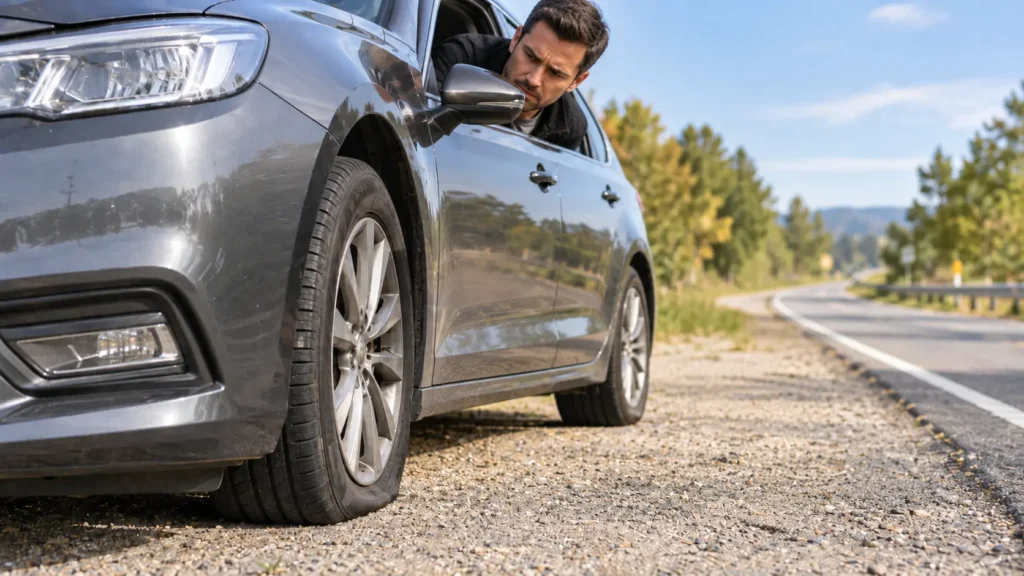
You’re pulling out of the grocery store parking lot when you hear it. A soft, steady hiss.
You stop. You roll down the window and listen again. Nothing. Must be your imagination. You drive home.
The next morning, one tire sits a little lower than the rest.
If that story feels familiar, you’re not alone. A leaking tire is one of the most common problems drivers face, and it always sparks the same urgent question. Can I still drive on this, or am I about to make it worse?
Let’s answer that honestly.
The short version: sometimes, but only carefully, and only for a short distance. A slow leak might get you to a shop. A fast leak or a flat should never be driven on. The gap between those two is where the real danger lives. At Milton Tires, this is one of the questions we hear most, so here’s how to think it through.
First, Figure Out What Kind of Leak You Have
Not all leaks are equal. Before you decide anything, you need to know which one you’re dealing with.
A slow leak loses air gradually. The tire might go soft over days or weeks. The usual causes are a small nail or screw in the tread, an aging valve, or a poor seal where the tire meets the rim. This is the kind you might, with care, drive a short way on.
A fast leak empties the tire in minutes or seconds. You’ll often hear a loud hiss, feel the car pull hard, or watch the tire flatten in front of you. This usually comes from a large puncture, a cut, or damage to the sidewall. This is not one to drive on.
The tricky part? A slow leak can become a fast one without warning. So even the “safer” leak deserves quick attention.
So, Can You Actually Drive on It?
Here’s the rule of thumb that keeps drivers safe.
If it’s a slow leak and the tire still holds most of its air, you can usually drive a short distance, slowly, straight to a shop or a safe place to swap on your spare. Think a few kilometres at low speed, not a cross-town commute.
If the tire is very low, fully flat, or losing air fast, stop driving. Every metre you roll on it risks your safety and often destroys the tire for good.
When in doubt, treat it as the more serious case. It’s the cheaper mistake to make.
Why Driving on a Leaking Tire Is So Risky
It’s tempting to think a soft tire is just a minor annoyance. It isn’t. An underinflated tire changes how your whole car behaves.
The rubber flexes far more than it should, which builds up heat fast. That heat is exactly what leads to a sudden blowout, often at highway speed where it’s most dangerous.
A low tire also lengthens your braking distance and makes the car harder to steer and control. And driving on a flat can chew up the wheel itself, turning a simple repair into a much bigger bill.
There’s one more cost people forget. Driving on a badly underinflated tire can wreck it internally, even if the original leak was small and fixable. A tire you could have repaired for a little now needs full replacement. That’s why a leaking tire should be looked at quickly. Catching it early is routine work for any shop offering proper tire repair services in Milton, and it’s often the difference between a quick fix and a new tire.
How Far Can You Drive on a Slow Leak?
As little as possible.
The goal isn’t to reach your destination. It’s to reach safety. Drive to the nearest shop, gas station with air, or flat spot where you can fit your spare.
Keep your speed low and stay in the right lane. If your tire pressure light is on, take it as a clear signal not to push your luck. The moment the car starts to feel unstable, pull over.
What to Do the Moment You Notice a Leak
If you spot or suspect a leak, a calm, simple plan goes a long way.
- Pull over somewhere safe and flat, away from traffic.
- Take a look. Is the tire low, or fully flat? Can you see a nail, a bulge, or a cut?
- If it’s a slow leak, add air if you can and drive gently to a shop.
- If it’s flat or badly damaged, fit your spare or call for roadside help.
- If something is stuck in the tire but it’s still holding air, leave it in place. Pulling it out can turn a slow leak into a fast flat.
Can a Leaking Tire Be Fixed?
Often, yes, and that’s the good news.
A small puncture in the center tread, roughly the size of a nail, can usually be repaired safely. That means a proper plug-and-patch from the inside, not just a quick outside plug.
But some leaks can’t be repaired at all. Damage to the sidewall, large holes, and tires that have been driven flat generally need to be replaced. Our guide on how to repair a car tire walks through exactly when a puncture can be fixed and when it can’t, so you know what to expect before you arrive.
When You Should Not Drive at All
Some situations call for a hard stop. Don’t drive, and call for help or fit your spare, if you see:
- A completely flat tire.
- A bulge or blister on the sidewall.
- A large cut, gash, or object you can fit a fingertip into.
- Air escaping fast enough to hear.
In these cases, a few extra minutes waiting for help is far better than risking a blowout on the road.
A Little Prevention Goes a Long Way
Most leak emergencies start as tiny problems you can catch early.
Once a month, walk around your car. Look for anything stuck in the tread, check for cracks or bulges, and check your pressure while the tires are cold. Two minutes in your driveway can save you a stressful morning on the shoulder of the highway.
The Bottom Line
Back to that hiss in the parking lot.
The drivers who come out of that story fine are simply the ones who don’t ignore it. They check the tire, judge the leak honestly, and get it looked at before a slow leak becomes a fast one.
So can you drive on a tire that’s leaking air? For a short, slow trip to safety with a minor leak, usually yes. For anything more serious, it’s not worth the risk.
If your tire keeps going soft, your pressure light is on, or you’ve picked up a nail, bring it in and let a certified technician take a look. A quick inspection today beats a blowout tomorrow.
Frequently Asked Questions
How long can I drive on a tire with a slow leak? Only far enough to reach safety, ideally a few kilometres at low speed to a shop or a place to fit your spare. The longer you drive, the more likely a repairable tire becomes a replacement.
Is a slow leak dangerous? It can be. A slow leak lowers your pressure over time, which affects handling and braking and can lead to a blowout. It can also turn into a fast leak without warning, so don’t leave it unchecked.
Can I just keep adding air to a leaking tire? No, that’s a temporary patch, not a fix. Constantly topping up means the leak is still there and getting worse. Have the tire inspected to find and repair the cause.
Should I use tire sealant from a can? Sealants can help in an emergency to get you to a shop, but they’re not a permanent repair and can complicate a proper inspection. Treat them as a short-term measure only.
Need Help With a Damaged Tire?
Our Milton team can inspect your tire and recommend the right repair or replacement.