
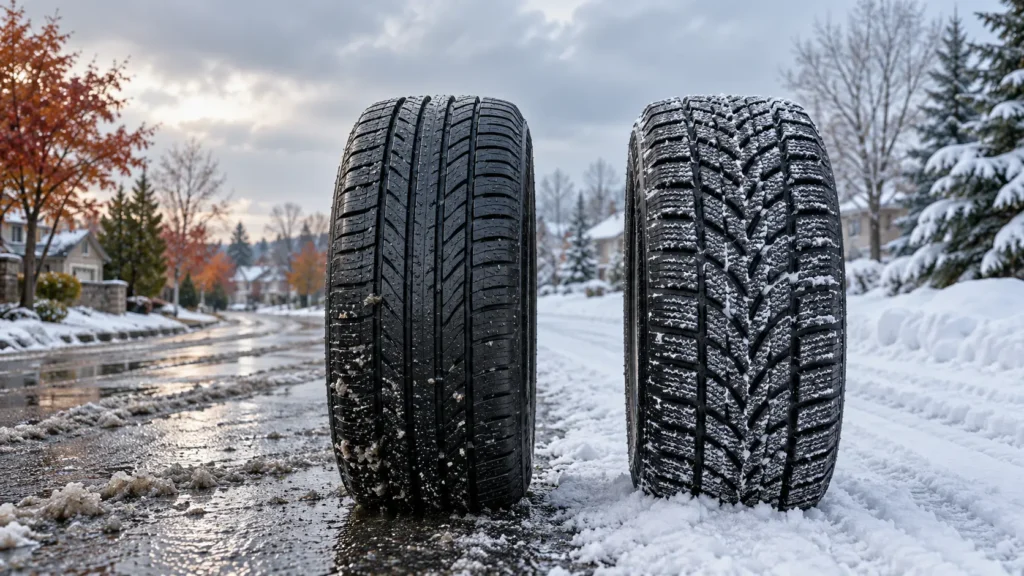
Picture yourself in a tire shop in late October. Two sets of tires sit in front of you. One says “all-weather.” The other says “winter.”
They cost different amounts. The salesperson is waiting. And you’re wondering which one keeps your family safe on an icy Milton morning.
Thousands of Canadian drivers face this exact question every fall. The names sound similar, but the difference is bigger than most people think. Let’s clear it up.
First, Clear Up the Name Confusion
Three types of tires get mixed up all the time. Here’s the plain-English version.
- All-season tires: Despite the name, these are really three-season tires. They harden and lose grip once it gets cold.
- All-weather tires: A true year-round tire. They carry a winter safety rating and stay flexible in the cold.
- Winter tires: Built for one job — maximum grip on snow, ice, and freezing roads.
The one people get wrong most often is “all-season.” It is not a winter tire.
The 7°C Rule Changes Everything
Here’s the science that matters most.
Below 7°C, the rubber in regular all-season tires starts to harden. Hard rubber grips less. That means longer braking distances and less control, even on dry, snow-free pavement.
Winter and all-weather tires use a softer compound that stays flexible in the cold. That flexibility is what keeps you gripping the road when the temperature drops. Transport Canada and tire makers point to this same 7°C mark as the moment all-season tires begin to struggle.
What Are All-Weather Tires?
All-weather tires are the middle ground. They’re safe to run all year, and they carry the Three-Peak Mountain Snowflake (3PMSF) symbol, which means they’ve passed an official snow-traction test.
Best for:
- Drivers in milder or urban areas
- Light snow, slush, and cold rain
- People who don’t want to swap tires twice a year
The trade-offs:
- Not as sharp as winter tires on deep snow and ice
- Tread wears faster if used through hot summers
- A compromise, not a specialist
What Are Winter Tires?
Winter tires are the specialists. They use the softest cold-weather rubber, deeper tread, and thousands of tiny slits (called sipes) that bite into snow and ice.
Best for:
- Heavy snow, ice, and deep-freeze regions
- Rural roads and long, cold commutes
- Anyone who wants the shortest stopping distance in winter
The trade-offs:
- You swap them on and off each season
- They wear quickly if left on in warm weather
- A second set of tires to store
On snow and ice, winter tires can stop your car noticeably shorter than all-seasons. That gap can matter at an icy intersection.
All-Weather vs. Winter: The Quick Version
- Choose all-weather if you want one simple set, drive mostly in town, and see more slush than deep snow.
- Choose winter if you face real snow and ice, drive rural or highway routes, or simply want the safest grip in the cold.
Both are far safer than all-seasons once winter hits. The 3PMSF snowflake is the symbol to look for on either one.
So, Which Is Right for You?
There’s no single answer, because it depends on how and where you drive.
If your winters are mild and mostly urban, all-weather tires may be all you need. If you regularly face snow-covered roads, dedicated winter tires are the safer call. Many Milton drivers sit somewhere in between, which is exactly where a quick chat with a technician helps.
A good rule of thumb: think about the worst 10% of your winter driving, not the average day. If that worst day includes a snowy highway, an early-morning ice patch, or a hilly side street, dedicated winter tires earn their keep. If it’s mostly cold, wet city streets, all-weather tires usually cope well.
Not sure which way to lean? Our team can match tires to your driving habits through our winter tire swap services in Milton, and handle the full changeover as part of our seasonal tire services.
The Bottom Line for Ontario Drivers
Winter tires aren’t legally required in Ontario, but they’re strongly recommended. Installing a winter-rated set can even earn you an insurance discount.
Whichever you choose, the worst option is running all-seasons through a Canadian winter. If your tires already feel off in the cold, that can be one of the warning signs of tire trouble worth checking before the snow arrives.
Frequently Asked Questions
Are all-weather tires good enough for Canadian winters?
For milder, urban winters with light snow, yes. For heavy snow and ice, dedicated winter tires grip better and stop shorter.
How do I know a tire is winter-rated?
Look for the Three-Peak Mountain Snowflake symbol on the sidewall. The older “M+S” marking alone is not the same thing.
Can I use winter tires all year?
It’s not recommended. The soft rubber wears quickly in summer heat and gives you less grip on hot roads.
Do I need all four winter tires, or just two?
Always install a full matching set of four. Mixing two winter tires with two all-seasons creates uneven grip and can make your car harder to control in a skid.
Need Help With a Damaged Tire?
Our Milton team can inspect your tire and recommend the right repair or replacement.