
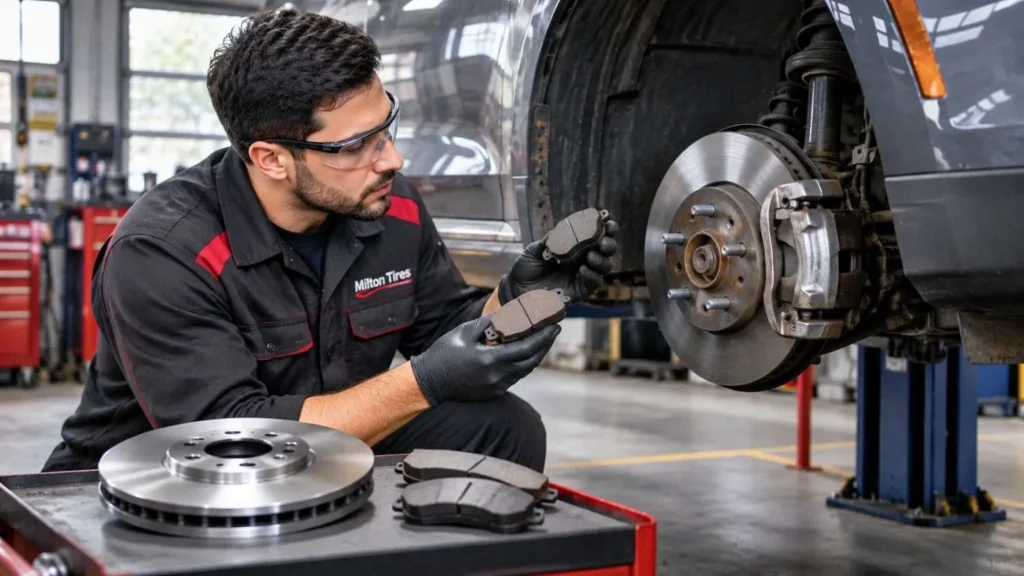
Are your brakes squeaking when you stop? Does your steering wheel vibrate during braking? Or has your mechanic recommended replacing both brake pads and rotors?
Many drivers wonder whether changing brake pads alone is enough or whether replacing the rotors is necessary.
Your vehicle’s braking system is essential for road safety. Understanding how brake pads and rotors work can help you recognize warning signs, avoid unnecessary expenses, and make informed maintenance decisions.
This guide explains when both components need replacement, common symptoms, repair costs, and maintenance tips for Milton drivers.
1. What Are Brake Pads and Rotors?
Brake pads and rotors work together to slow and stop your vehicle.
Brake pads contain friction material that presses against the rotors when you apply the brakes.
Brake rotors are metal discs that rotate with the wheels, providing the surface needed for braking friction.
Over time, both components wear due to heat, friction, driving conditions, and braking habits.
Milton Tires provides professional brake repair services in Milton , including inspections, brake pad replacement, rotor replacement, and caliper servicing.
Regular inspections help identify wear before it affects vehicle safety.
2. When Should Brake Pads Be Replaced?
Brake pads gradually lose friction material through normal driving.
Replacement becomes necessary when they reach the manufacturer’s minimum thickness or show damage.
Common warning signs include:
- Squealing or grinding noises.
- Reduced braking performance.
- Brake warning lights.
- Uneven brake pad wear.
- Unusual sensations while stopping.
Some brake pads include wear indicators that produce noise when replacement is approaching.
However, not every braking noise means the pads are worn out.
A professional inspection helps determine whether replacement is necessary.
3. When Should Brake Rotors Be Replaced?
Brake rotors can develop wear, grooves, cracks, or thickness variations.
Replacement may be required when:
- Rotor thickness reaches the manufacturer’s minimum limit.
- Deep grooves develop.
- Cracks or significant heat damage appear.
- Excessive corrosion affects the braking surface.
- Thickness variation causes braking vibration.
- Resurfacing is no longer appropriate.
Technicians measure rotor thickness using specialized equipment.
A rotor may appear acceptable but still be too thin for safe use.
Always follow manufacturer specifications rather than relying only on mileage.
4. Should Brake Pads and Rotors Be Replaced Together?
Brake pads and rotors do not always need replacement at the same time.
If the rotors are within manufacturer specifications, have suitable surfaces, and show no significant damage, replacing only the pads may be appropriate.
However, replacing both components is often recommended when rotors are worn, damaged, or close to their minimum thickness.
Installing new brake pads against damaged rotors can cause uneven contact, noise, or poor braking performance.
A qualified technician should inspect both components before recommending replacement.
The final decision should depend on condition, measurements, and manufacturer guidelines.
5. Signs You May Need Both Replaced
Several symptoms suggest your braking system needs immediate attention.
Grinding noises: Severely worn pads may allow metal components to contact the rotors.
Braking vibration: Rotor thickness variations or other mechanical problems may cause pulsation.
Visible grooves: Deep scoring can indicate damaged rotor surfaces.
Reduced stopping performance: Worn or malfunctioning components can affect braking.
Uneven wear: Sticking calipers or damaged hardware may accelerate component wear.
These signs do not automatically mean both parts need replacement.
If braking becomes unreliable, avoid driving until the vehicle has been inspected.
6. How Long Do Brake Pads and Rotors Last?
Brake component lifespan depends on several factors.
These include:
- City versus highway driving.
- Frequent stop-and-go traffic.
- Vehicle weight.
- Driving habits.
- Brake pad materials.
- Road salt and moisture.
- Caliper condition.
Drivers commuting through Milton, Mississauga, and Toronto may experience different wear rates depending on traffic conditions.
Instead of relying on a fixed replacement interval, follow your vehicle manufacturer’s inspection schedule.
Unexpected braking noises or changes in performance should prompt an earlier inspection.
7. How Much Does Brake Replacement Cost in Canada?
The cost of brake pads and rotors in Canada varies according to the vehicle and required repairs.
Pricing factors include:
- Vehicle make and model.
- Front or rear brake components.
- Rotor size and design.
- Brake pad material.
- Labour requirements.
- Caliper and hardware condition.
- OEM versus aftermarket parts.
Replacing pads and rotors together generally costs more than replacing pads alone.
However, delaying necessary repairs can cause additional damage.
For a vehicle-specific estimate, visit Milton Tires’ contact and appointment page.
A professional inspection helps determine which repairs are actually required.
8. Can You Replace Only One Brake Rotor?
Brake rotors are generally replaced in axle pairs to maintain balanced braking characteristics.
Replacing only one rotor may create differences in surface condition or braking behaviour.
Brake pads are also typically replaced as axle sets.
However, specific procedures depend on vehicle manufacturer requirements.
A qualified technician should determine the correct approach.
Using compatible components and following proper installation procedures helps maintain reliable braking performance.
9. How Can You Extend Brake Life?
Good driving habits and regular maintenance may help reduce premature brake wear.
Useful practices include:
- Maintaining a safe following distance.
- Avoiding unnecessary hard braking.
- Reducing excessive vehicle loads.
- Addressing unusual noises promptly.
- Scheduling regular brake inspections.
- Maintaining proper tire pressure and tread condition.
Tires also influence traction and stopping performance.
Milton Tires provides tire repair service in Milton to help drivers maintain suitable tire condition.
Well-maintained brakes and tires work together to support safer driving.
10. What Happens During a Brake Inspection?
A professional brake inspection evaluates important braking components.
Technicians may check:
- Brake pad thickness.
- Rotor thickness and surface condition.
- Calipers and brake hardware.
- Brake fluid condition.
- Hoses and visible leaks.
- Uneven wear.
These inspections help identify components requiring repair or replacement.
A brake inspection is particularly important before long journeys or whenever braking performance changes.
Frequently Asked Questions
1. Do brake pads and rotors always need replacement together?
No. Rotors may remain serviceable if they meet manufacturer specifications and have suitable braking surfaces.
2. What happens if I replace pads but not rotors?
If rotors are damaged or excessively worn, new pads may experience noise, uneven wear, or braking problems.
3. How do I know if my rotors are worn?
Possible signs include braking vibration, deep grooves, cracks, or thickness measurements below manufacturer limits.
4. Can worn brake pads damage rotors?
Yes. Severely worn pads may allow metal components to contact and damage the rotors.
5. Is brake grinding dangerous?
Grinding can indicate serious wear. Have your brakes inspected promptly and avoid driving if braking is unsafe.
6. Are brake rotors more expensive than brake pads?
Costs vary by vehicle, but replacing rotors generally increases total repair expenses compared with replacing pads alone.
Get Professional Brake Repair at Milton Tires
Knowing when to replace brake pads and rotors helps maintain reliable braking and avoid unnecessary repairs.
Milton Tires provides brake inspections, pad replacement, rotor replacement, and other automotive maintenance services.
Our team also offers tire deals, tire installation, seasonal tire changes, and oil changes.
Contact Milton Tires to schedule a professional brake inspection or request a repair estimate.
Reliable braking starts with timely inspections and proper maintenance.
Need Help With a Damaged Tire?
Our Milton team can inspect your tire and recommend the right repair or replacement.