
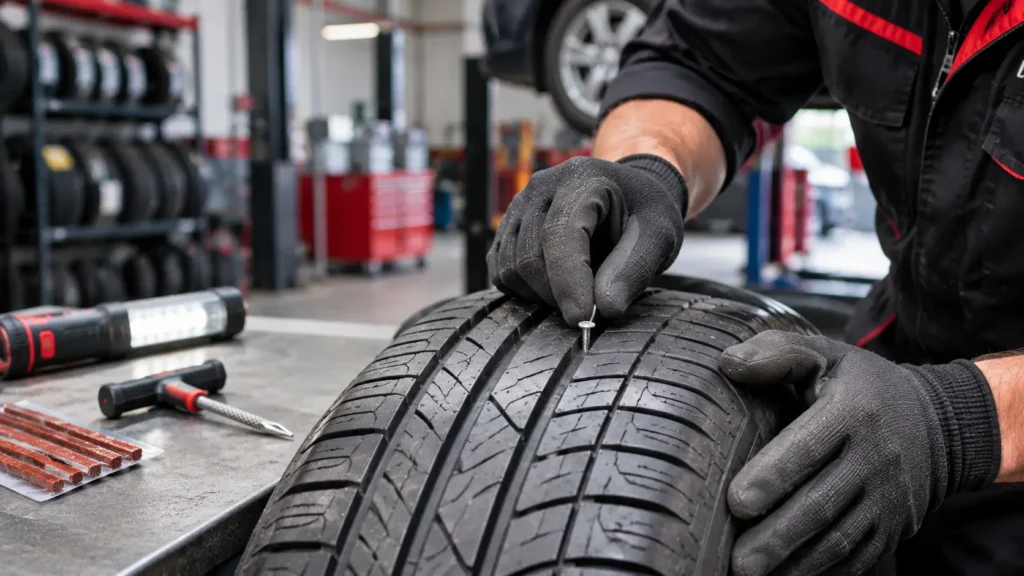
Found a nail in your tire? Is your tire pressure dropping overnight? Or are you wondering whether a punctured tire needs replacing?
A flat tire can disrupt your day, especially when you’re commuting through Milton or travelling on Ontario highways. Fortunately, not every puncture means buying a new tire.
Professional tire puncture repair can sometimes restore a damaged tire safely, saving you the expense of replacement.
However, puncture location, size, tread condition, and internal damage determine whether repair is possible.
Here’s how to recognize a repairable puncture, understand your options, and know when replacement is the safer choice.
1. What Is Tire Puncture Repair?
Tire puncture repair involves fixing damage caused by nails, screws, sharp stones, or other objects that penetrate a tire.
A puncture may cause an immediate flat or a gradual air leak.
Professional repair involves identifying the damage, removing the tire from its wheel, inspecting the interior, and using an appropriate repair method.
Milton Tires provides tire repair services in Milton for drivers experiencing punctures, pressure loss, or tire damage.
However, a tire must meet established safety criteria before a technician can approve a repair.
2. When Can a Punctured Tire Be Repaired?
A tire may be repairable when it meets several conditions:
- The puncture is within the repairable central tread area.
- The injury is no larger than 6 mm (¼ inch).
- The tire has sufficient remaining tread depth.
- The tire has not been driven while flat.
- No internal structural damage is present.
- The repair will not overlap another repair.
For example, a small nail puncture in the middle of the tread may be repairable if the remaining tire is in good condition.
However, the location alone does not guarantee safety.
A qualified technician must inspect the tire before recommending repair.
3. When Is Tire Replacement Necessary?
Some tire damage cannot be safely repaired.
Sidewall punctures: Sidewalls constantly flex while driving, making puncture repairs unsafe.
Shoulder damage: Punctures near the outer tread edges generally fall outside the approved repair area.
Large holes: Damage exceeding 6 mm typically requires replacement.
Internal damage: Broken cords, separation, or damage from driving underinflated can make a tire unsafe.
Excessive wear: Tires with inadequate tread depth should not be repaired.
Overlapping repairs: Multiple punctures too close together may prevent a proper repair.
When replacement is necessary, choosing a tire that meets your vehicle’s specifications is essential.
4. Can You Repair a Tire With a Nail in It?
A nail or screw does not automatically mean your tire needs replacing.
If the object penetrates the central tread area and the injury is small, professional repair may be possible.
However, avoid removing the nail yourself.
The object may temporarily slow air loss, and removing it can worsen the leak.
If your tire remains inflated, arrange an inspection promptly rather than continuing normal driving.
If pressure is low, the tire is visibly flat, or handling feels unsafe, stop driving and seek roadside assistance.
5. Tire Patch vs. Plug: What’s the Difference?
Two common repair materials are patches and plugs.
A plug fills the puncture channel, while an internal patch seals the tire’s inner liner.
Industry guidance recommends a proper combination repair that fills the injury and seals the interior.
A plug installed from outside the tire without internal inspection is not considered a permanent professional repair.
Similarly, a patch alone does not adequately fill the puncture channel.
Before approving repairs, technicians should remove the tire from the wheel and inspect its internal condition.
6. Can You Drive With a Punctured Tire?
Driving on a damaged tire can be dangerous.
Even a slow leak may cause pressure to fall, increasing heat and potentially damaging the tire structure.
If you notice steering difficulties, unusual vibrations, or a tire pressure warning, respond promptly.
When safe, move away from traffic and stop in a suitable location.
Avoid driving on a visibly flat tire.
A temporary spare, where provided, should be used according to the vehicle manufacturer’s instructions.
If you’re uncertain, roadside assistance is the safer option.
7. How Much Does Tire Puncture Repair Cost?
The cost of flat tire repair in Milton depends on the damage and work required.
Factors include:
- Puncture location.
- Extent of damage.
- Tire size and construction.
- Inspection requirements.
- Repair materials.
- Mounting and balancing.
A straightforward repair may cost less than purchasing a replacement tire.
However, replacing an unsafe tire is more important than minimizing the immediate expense.
For service availability and a vehicle-specific quote, use Milton Tires’ contact and appointment page.
8. Can Run-Flat Tires Be Repaired?
Run-flat tires are designed to allow limited driving after pressure loss under specified conditions.
However, this does not mean every punctured run-flat tire can be repaired.
Repair eligibility depends on the manufacturer’s policy, pressure loss, driving distance, and internal condition.
Some run-flat tires must be replaced after being driven with insufficient pressure.
A professional should inspect the tire and check the manufacturer’s guidance before approving repairs.
9. How Can You Prevent Tire Punctures?
Not every puncture is avoidable, but regular maintenance can reduce certain risks.
Useful precautions include:
- Checking tire pressure regularly.
- Inspecting tires for embedded objects.
- Avoiding visible road debris.
- Replacing excessively worn tires.
- Monitoring uneven treadwear.
- Scheduling regular tire inspections.
Look for cuts, bulges, cracks, and unusual wear.
Milton Tires’ tire maintenance FAQs provide additional information about tire inspections, seasonal changes, and routine services.
Regular maintenance helps identify problems before they become emergencies.
10. Should You Repair or Replace Your Tire?
The decision depends on more than puncture size.
A technician should evaluate the tire’s age, tread condition, structural integrity, and previous repairs.
Repairing an otherwise healthy tire may be economical and practical.
However, replacement is necessary when damage exceeds acceptable safety limits.
If replacement is required, compare suitable all-season, winter, or performance tires based on your vehicle and driving needs.
Choosing the correct tire helps maintain balanced handling and reliable road performance.
Frequently Asked Questions
1. Can a tire with a nail be repaired?
Often, yes, if the puncture is small, within the repairable tread area, and the tire passes inspection.
2. Can tire sidewall damage be repaired?
No. Sidewall punctures generally require tire replacement because of structural and safety concerns.
3. Is a tire plug a permanent repair?
A plug alone is not considered an acceptable permanent repair. Proper repairs require internal inspection and appropriate combined repair materials.
4. Can you repair a tire after driving flat?
Generally, no. Driving without sufficient pressure can cause hidden structural damage.
5. How long does a repaired tire last?
A correctly repaired tire may remain serviceable, provided it meets manufacturer guidelines and is properly maintained.
6. Is repairing a tire cheaper than replacing it?
Usually, a straightforward repair costs less, but the final decision must prioritize tire safety and condition.
Get Professional Tire Puncture Repair in Milton
A punctured tire doesn’t always mean buying a replacement. However, proper inspection is essential before deciding whether repair is safe.
Milton Tires provides flat tire repair, tire inspections, installation, balancing, and tire replacement services.
Our team also helps drivers explore all-season, winter, and performance tire options.
Location: 410 Industrial Drive, Milton, ON L9T 5A6
Phone: 905-266-2275
Contact Milton Tires to arrange a tire inspection or request a quote.
Don’t ignore a puncture. Get your tire inspected before a small problem becomes a bigger safety concern.
Need Help With a Damaged Tire?
Our Milton team can inspect your tire and recommend the right repair or replacement.