
It’s the first truly cold morning of the year. You step outside, your breath fogs, and there’s a thin sheet of frost on your windshield.
You scrape it off, climb in, and pull onto the road. The car feels a little slippery pulling away from the stop sign. And a small voice in your head asks: Is it time for winter tires yet?
That instinct is usually right. But temperature isn’t the only thing to consider. Your individual auto insurance policy may also have specific requirements about when winter tires should be installed. Before making your seasonal changeover, check your policy or contact your insurance provider to confirm whether there is a specific date or requirement that applies to you.
Here are the clear signs it’s time to make the switch.
The Golden Rule: Watch the Thermometer
If you remember one thing, remember this number: 7°C.
Below 7°C, all-season tires can become less flexible and provide less grip. Winter tires are designed to remain more flexible in cold conditions, helping provide better traction when temperatures drop.
So while snow is an obvious sign of winter, temperature is an important signal to watch before the first snowfall.
A simple guideline many drivers follow is the “7 for 7” rule:
- Switch to winter tires once temperatures consistently stay below 7°C.
- Switch back once temperatures are consistently above 7°C in spring.
- Also check your insurance policy, as your insurer may specify a particular installation period or date.
For extra guidance on safe winter driving, the Government of Ontario also provides information about winter tires and winter driving.
Insurance reminder: Tire recommendations can vary by driver, vehicle, and insurance policy. Please check your individual insurance requirements before deciding when to install or remove your winter tires. If your policy specifies a date or period, follow the requirements that apply to your coverage.
Clear Signs It’s Time to Swap
Not sure if the moment has arrived? Watch for these signals.
- Temperatures are dipping below 7°C. Especially during your morning commute.
- Your insurance policy has a specific requirement. If your insurer specifies when winter tires should be installed, make sure you meet that requirement.
- The first frost appears. Frost on the windshield means road surfaces can also be very cold.
- Snow or ice is in the forecast. Don’t wait for it to actually fall before preparing.
- Your all-seasons feel different. A slippery feeling or reduced confidence in cold conditions can be a sign that it’s time to switch.
- The calendar reaches late October. In the Milton area, this is often when drivers start arranging their seasonal changeover.
- Tire shops are booking up. When appointments become difficult to find, you’ve waited long enough.
If several of these are true, it’s worth arranging your winter tire changeover.
Don’t Wait for the First Snowfall
Here’s the mistake many drivers make: they wait for snow.
The problem is that cold roads can become slippery before the first snowfall. Frost, freezing temperatures, and possible black ice can create difficult driving conditions while the roads still look clear.
There’s a practical reason to move early, too. The period around the first major snowfall is often one of the busiest times of year for tire shops. Booking ahead can help you avoid the seasonal rush.
Just remember: don’t rely on temperature alone. Check your insurance requirements as well.
What About Swapping Back in Spring?
Winter tires aren’t meant for warm weather. Once spring arrives and temperatures consistently stay above 7°C, it’s generally time to switch back to your all-season or summer tires.
Leaving winter tires on through spring and summer can:
- Wear down their softer tread more quickly
- Affect handling on warmer pavement
- Reduce the useful life of the tires
- Increase your tire replacement costs
Your insurance policy may also have requirements related to winter tire use, so check your individual coverage before removing them.
A good habit is to plan your spring tire changeover once winter conditions have ended and temperatures are consistently warmer.
More Than Just Tires: A Quick Cold-Weather Check
Swapping tires is an important step, but a few small checks can also help prepare your vehicle for winter.
- Check your tire pressure. Cold temperatures can reduce tire pressure, so check your tires regularly and inflate them to the vehicle manufacturer’s recommended pressure.
- Look at your tread depth. Winter tires need adequate tread to provide traction on snow and slush.
- Inspect for cracks or damage. Check the tires carefully before installation.
- Don’t forget your spare. Make sure it is properly inflated and ready to use.
A few minutes of preparation can help prevent an unpleasant surprise on a cold winter morning.
Book Your Winter Tire Swap Early
The best time to prepare for winter is before the first major snowfall creates a rush at tire shops.
If the thermometer is dropping, frost is appearing in the mornings, or your insurance policy specifies that winter tires should be installed, it’s time to start planning your changeover.
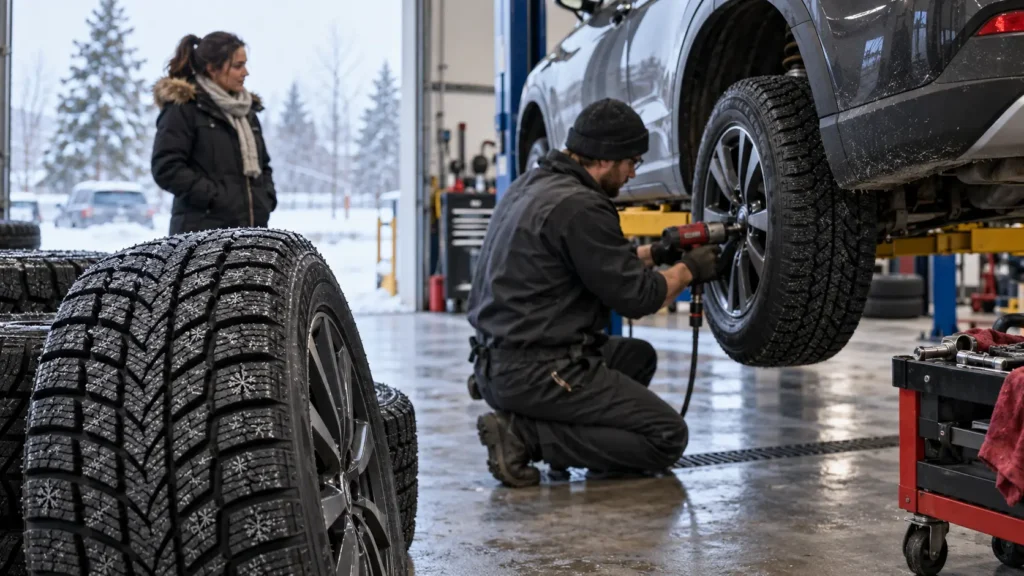
Our team makes the changeover quick and easy through our winter tire swap services in Milton, and we can inspect your tread and pressure during your winter tire changeover too.
Still weighing your options between tire types? Our guide on all-weather vs. winter tires breaks down the differences to help you understand which option may suit your driving needs.
Milton Tires
📍 410 Industrial Dr, Milton, ON L9T 5A6
📞 (905) 266-2275
Frequently Asked Questions
Is there an exact date to swap to winter tires?
There is no single date that applies to every driver because weather conditions vary from year to year. The 7°C guideline is commonly used to help determine when temperatures are cold enough for winter tires. However, your individual insurance policy may have its own requirements, so check with your insurance provider before making the change.
Should I wait until it snows to switch?
No. Cold temperatures can affect tire performance before snow arrives. Monitor temperatures, weather conditions, and your insurance requirements rather than waiting for the first snowfall.
Can my insurance policy require winter tires?
Insurance requirements can vary depending on your policy and insurer. Some policies may specify a particular period or date for winter tire use. Always check your individual insurance policy or contact your insurance provider to confirm the requirements that apply to you.
How long does a tire swap take?
A standard seasonal changeover is usually a straightforward service. Booking an appointment ahead of the seasonal rush can help reduce waiting time.
Should I follow the 7°C rule or my insurance requirement?
Check both. The 7°C guideline relates to tire performance in cold weather, while your insurance policy may have separate requirements. If your individual policy specifies a date or period for winter tires, make sure you follow the terms of your coverage.
Need Help With a Damaged Tire?
Our Milton team can inspect your tire and recommend the right repair or replacement.